
Supervised practical FUE with live-patient progression
International Institute of Hair Restoration
Hair restoration training for doctors, consultants, and clinics.
Science-first teaching, supervised clinical exposure, and defined progression for practitioners and teams building capability through an institute model.
Doctors and consultants / nurses can begin admissions review. Clinics can explore team development.
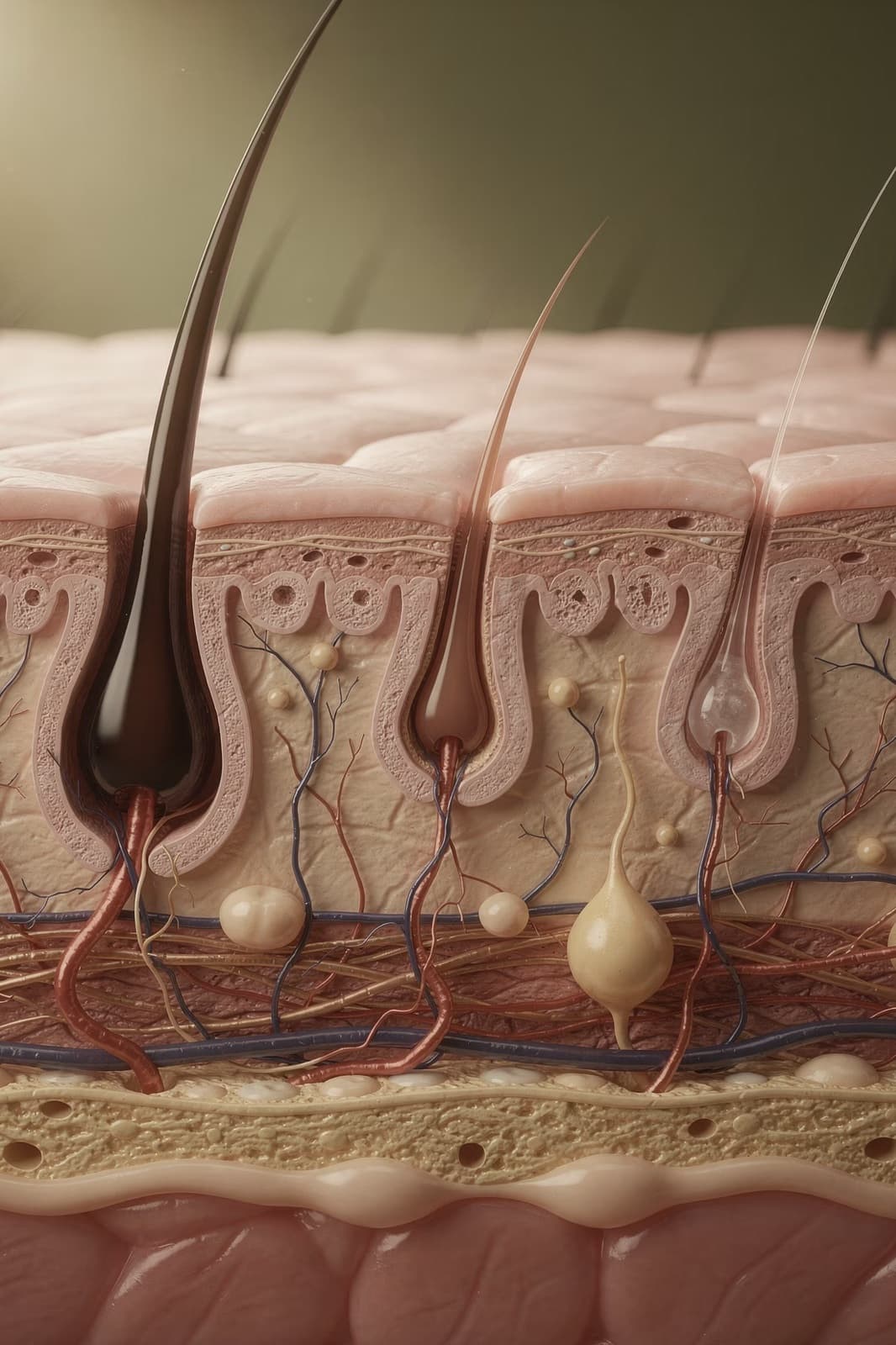
Science
Biology before technique
Restoration that holds up starts with causes, progression, and the follicle—not only operative steps.

Four domains that ground surgical judgment.
Context
The problem with traditional training
Too short, too shallow, and too little support to build lasting judgment.
Short and shallow training windows
Doctors left without mentorship after completion
Limited outcome feedback and audit loops
No clear progression from observation to independent practice
Model
An institute model, not a short course
Science, surgery, audit, and mentorship sit inside one training model, so development stays structured from first principles to practice.
Science and trichology for clinical decisions
Donor stewardship and operative discipline
Audit and Follicle Intelligence linked to outcomes
Mentorship and faculty feedback beyond initial training
Explicit milestones for clinical progression
Pathway
A staged route into clinical responsibility
The route is clear: learn the science, observe live cases, take defined responsibilities, review performance, and advance when ready.
Learn
Science, assessment, and surgical foundations.
Observe
Live cases and decision-making under faculty guidance.
Assist
Defined roles in supervised clinical settings.
Perform
Hands-on steps under direct supervision.
Audit
Case review against standards.
Advance
Progression when the next scope is earned.
In practice
Defined responsibilities
Each stage has a named scope, rather than leaving readiness open to interpretation.
Supervision before autonomy
Clinical exposure expands with oversight, correction, and responsibility matched to performance.
Review before advancement
Case review and standards shape when the next step is appropriate.

Outcomes
Why the model improves practice
Capability grows when exposure, feedback, and support continue beyond the first training block.
More deliberate repetition in clinical settings
Clearer feedback from audit and benchmarking
Outcome review tied to improvement
Support that continues beyond initial training

Mentorship
Mentorship built into the model
Experienced surgeons review cases, correct technique, and support decision-making as responsibility increases.
Live feedback
Structured input while you operate under supervision.
Case review
Planning and debrief with experienced clinicians.
Ongoing support
Mentorship that continues after initial training.
Institute Model
How the training is structured
A science-led curriculum, supervised exposure, case review, and explicit standards.
Science-led curriculum Biology, diagnosis, and planning come before technique.
Staged progression Responsibility increases through defined stages.
Supervised exposure Live-case learning is matched to oversight and readiness.
Case review Cases are reviewed, corrected, and revisited.
Explicit standards Advancement is tied to standards and governance.

Connected System
Ecosystem intelligence behind IIOHR standards
IIOHR remains the training and certification center, supported by a wider ecosystem for review, biological context, and intelligence.
Global Hair Intelligence Network
Follicle Intelligence
Clinical AI Analysis
Visit platformTraining and Certification Pillar
IIOHR
Education and Certification
Visit platformTraining and Certification Pillar
HairAudit
Surgical Audit System
Visit platformHair Longevity Institute
Biological Treatment Pathways
Visit platformActive standard anchor: IIOHR
Ecosystem roles
IIOHR
Training, progression, and certification standards.
HairAudit
Independent review, transparency, and benchmarking.
HLI
Biological and longitudinal treatment context.
Follicle Intelligence
Analysis and intelligence layer across outcomes.
Next step
Choose your route
Select the page that matches your role, then move into admissions when ready.
PDF guide
Why IIOHR — Executive overview
Ecosystem · HairAudit · Hair Longevity Institute · Follicle Intelligence